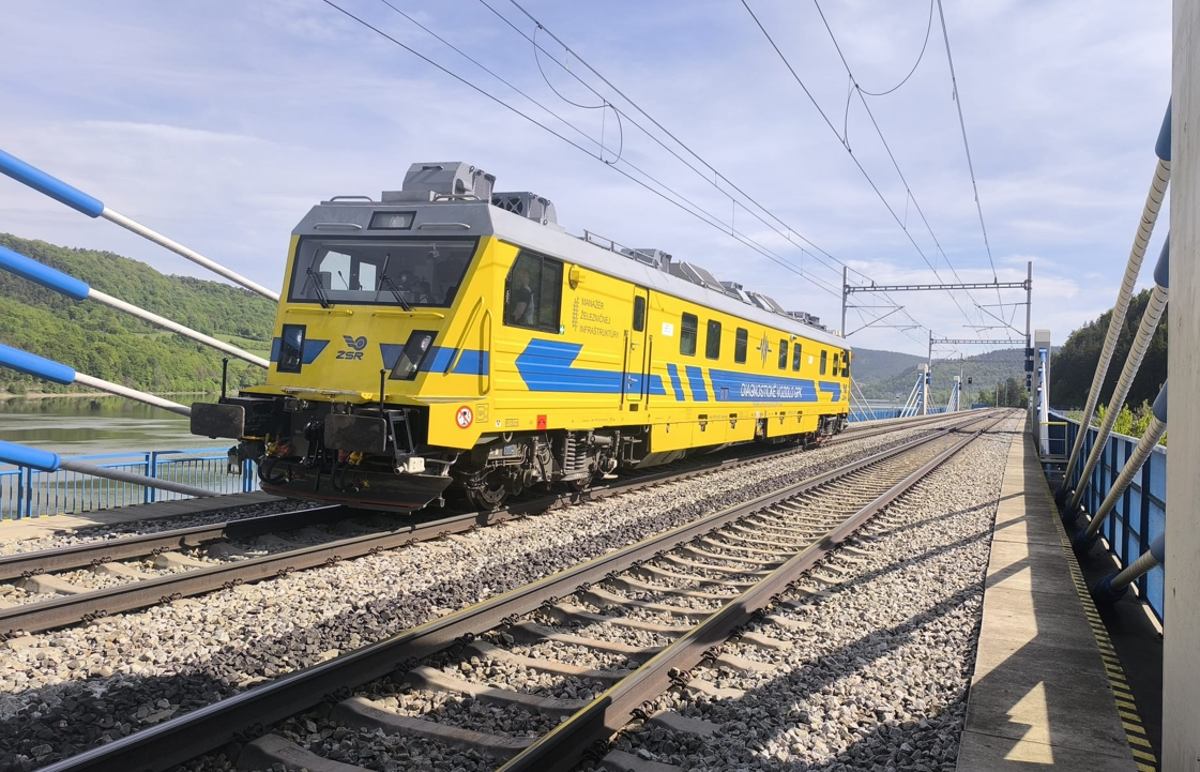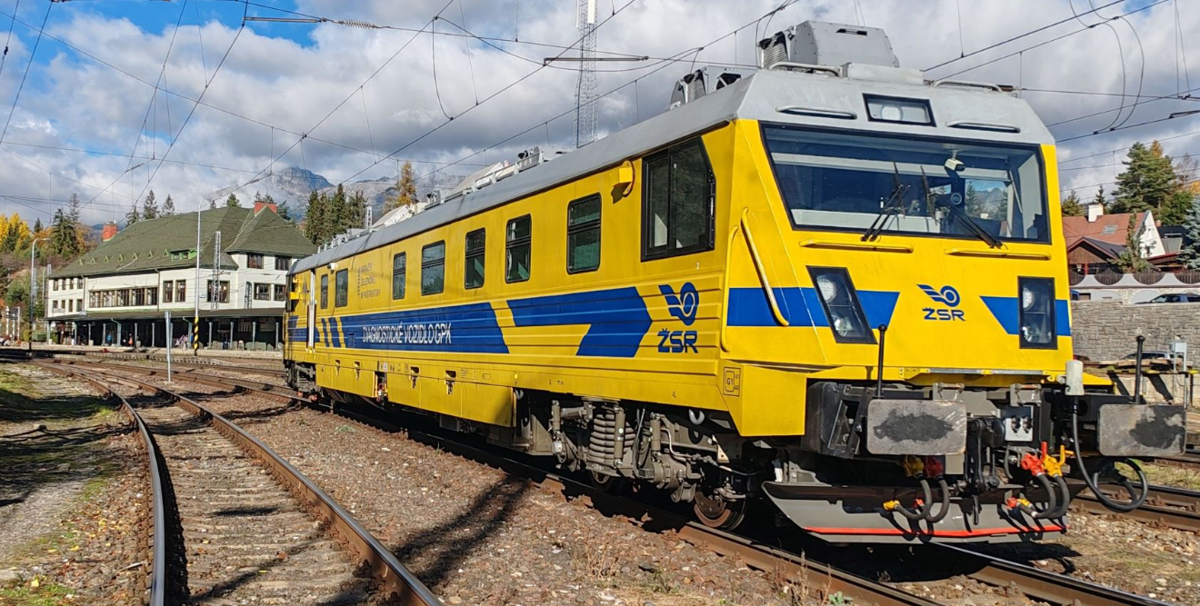
On 20 April 2026, the Railways of the Slovak Republic (ŽSR) took delivery of its second modern track geometry measuring vehicle. The deployment of this new, state-of-the-art diagnostic vehicle will replace the currently used 42-year-old vehicle, which is now technically, operationally and structurally obsolete.
The GPK diagnostic vehicle was supplied by the Czech company NDCon LOGIC a.s. and represents the fifth vehicle of this type delivered to the Slovak and Czech markets. It is a self-propelled diagnostic vehicle with independent traction, capable of operating at speeds of up to 160 km/h. Thanks to these parameters, it is the first GPK vehicle of its kind in Central and Eastern Europe.
The vehicle is equipped with the LS06 train protection system and ETCS Level 2. The related odometry and ETCS compatibility tests were carried out on corridor railway lines managed by ŽSR. During trial operation, the vehicle covered a total of 9,248 km.
The interior of the GPK diagnostic vehicle includes two fully equipped driver’s cabs, three crew compartments, a measurement and conference room, a kitchenette, a bathroom with a vacuum toilet system, two corridors, a workshop and a service room. The onboard microclimate is maintained by air-conditioning units, an independent diesel central heating system and an electric boiler. The vehicle is also equipped with a backup power generator.
With its technical equipment and onboard facilities, the vehicle provides fully equipped and comfortable working and living conditions for a four-member crew.
The GPK diagnostic vehicle is equipped with laser diagnostic systems for measuring track geometry parameters, rail profile, rail corrugation and microgeometry of rail head surfaces, clearance gauge, track bed profile, track centre distances and axle-box acceleration. The scope of delivery also includes a positioning system adapted to ŽSR conditions, as well as evaluation and analysis software.
The deployment of the GPK diagnostic vehicle will streamline, improve and accelerate the diagnostic process for the assessed railway infrastructure parameters, while also enhancing the overall quality of diagnostics. At the same time, it will make a significant contribution to the development of innovative diagnostics within the ŽSR environment.